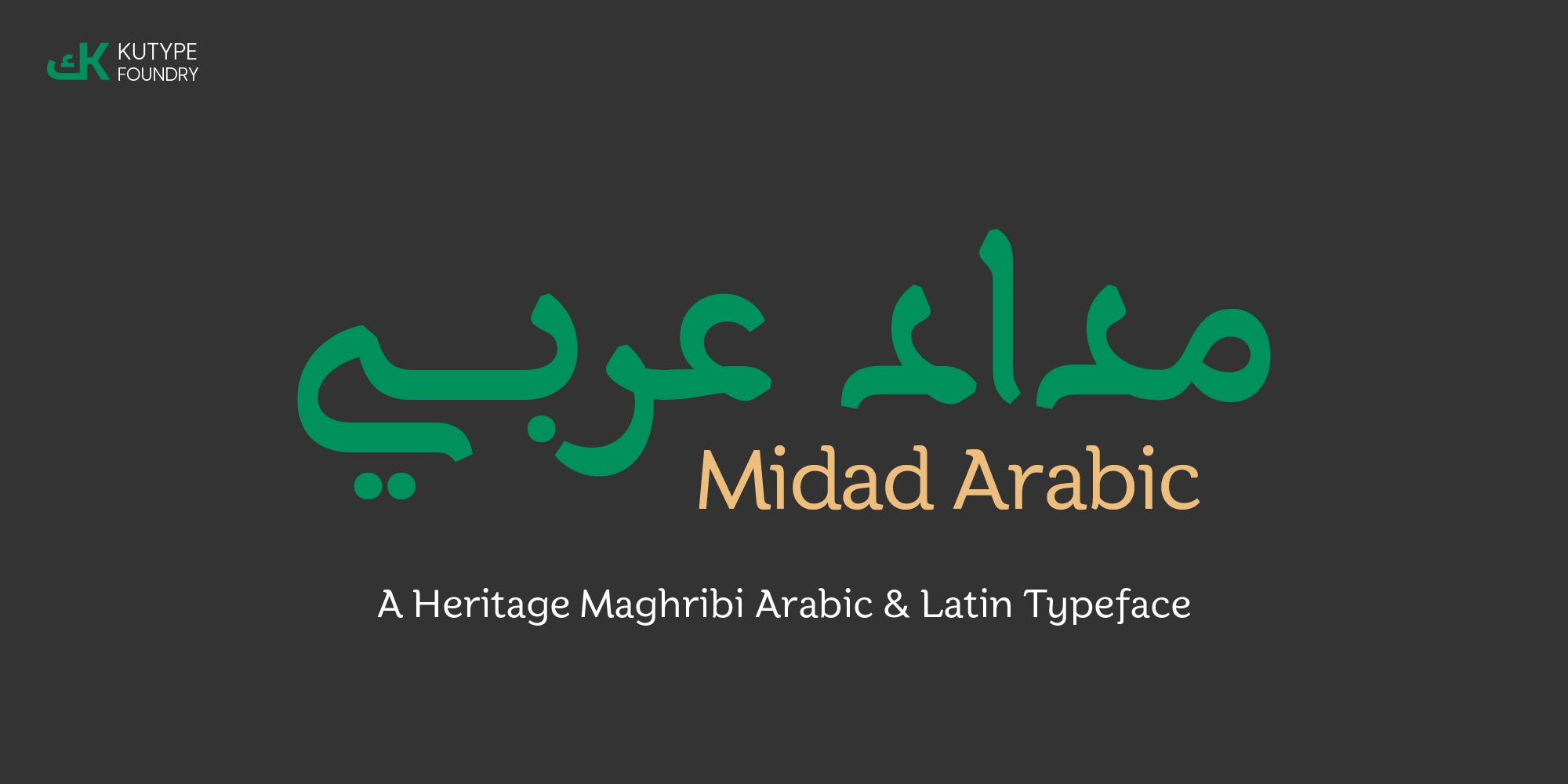
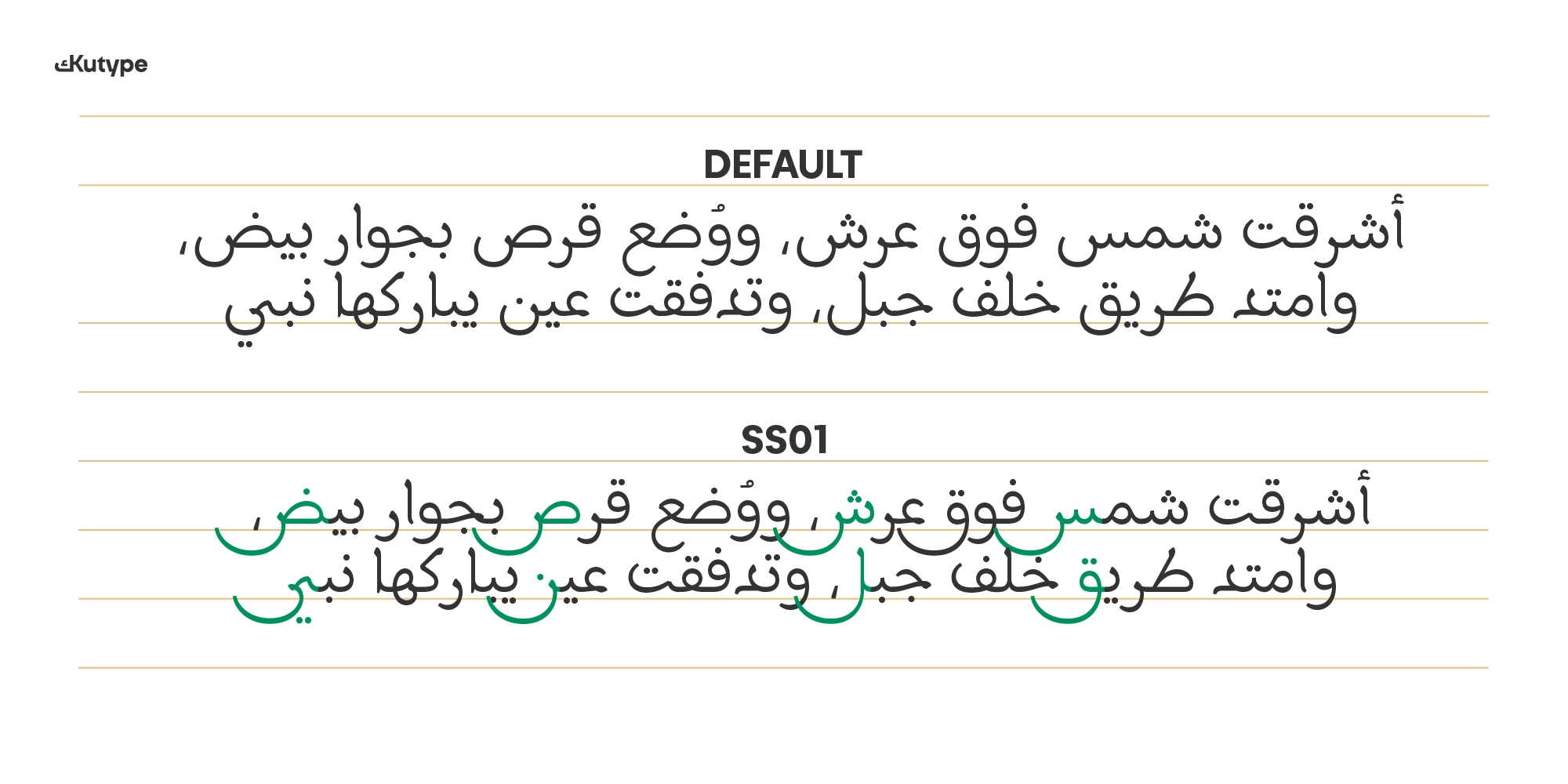
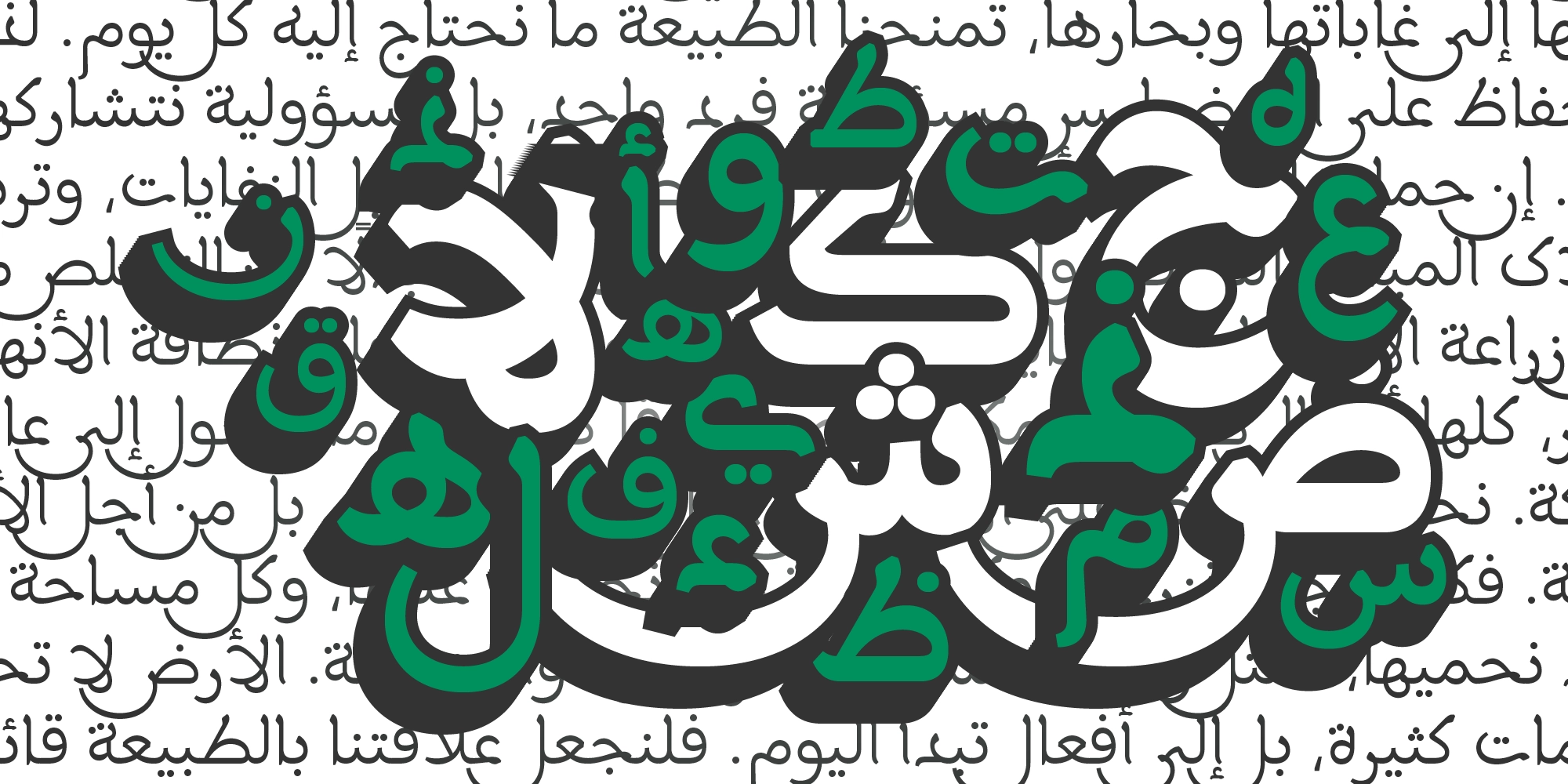
Midad Arabic inspired by the distinctive visual character of Maghribi script, it brings the spirit of North African Arabic calligraphy into a contemporary type system for branding, editorial design, cultural projects, and digital experiences.
Built as an Arabic and Latin typeface system, Midad Arabic explores the relationship between historical influence and contemporary typography. Its Arabic forms draw inspiration from the expressive rhythm, rounded structures, and distinctive proportions associated with Maghribi writing traditions, while the Latin counterpart is designed to create a compatible visual voice.
The result is a typeface that connects heritage and modernity. Midad Arabic preserves the character of a historic Arabic writing tradition while giving designers a flexible tool for contemporary visual communication.
At its core, Midad Arabic delivers a simple idea: heritage can be preserved not only through history, but also through new forms of expression.
Design Inspiration & Naming
The name Midad (مِداد) refers to ink, a fundamental element of writing and calligraphy. In Arabic, midad evokes the ink used to transform thought into written form, connecting ideas, language, and visual expression.
This meaning closely reflects the philosophy behind the typeface. Before digital typography, letters were shaped through the movement of a writing instrument and the flow of ink across a surface. Midad Arabic revisits that relationship between ink, letter, and culture, translating it into a contemporary typeface system.
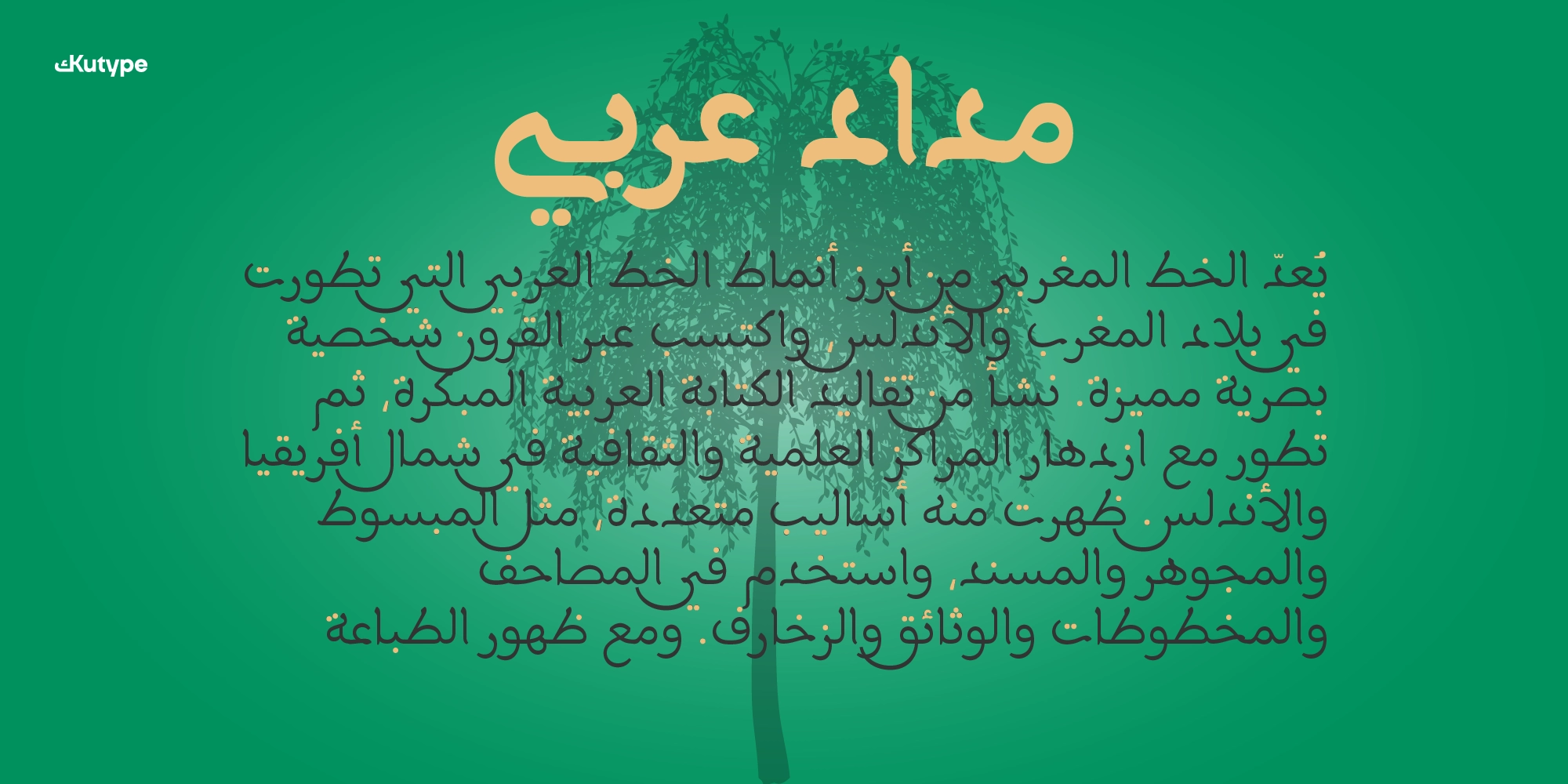
The primary inspiration for Midad Arabic comes from the Maghribi tradition of Arabic calligraphy, a family of writing styles that developed across the western Islamic world, particularly in the Maghrib and al-Andalus. Maghribi writing is recognized for its distinctive proportions, rounded forms, expressive curves, and dynamic rhythm.
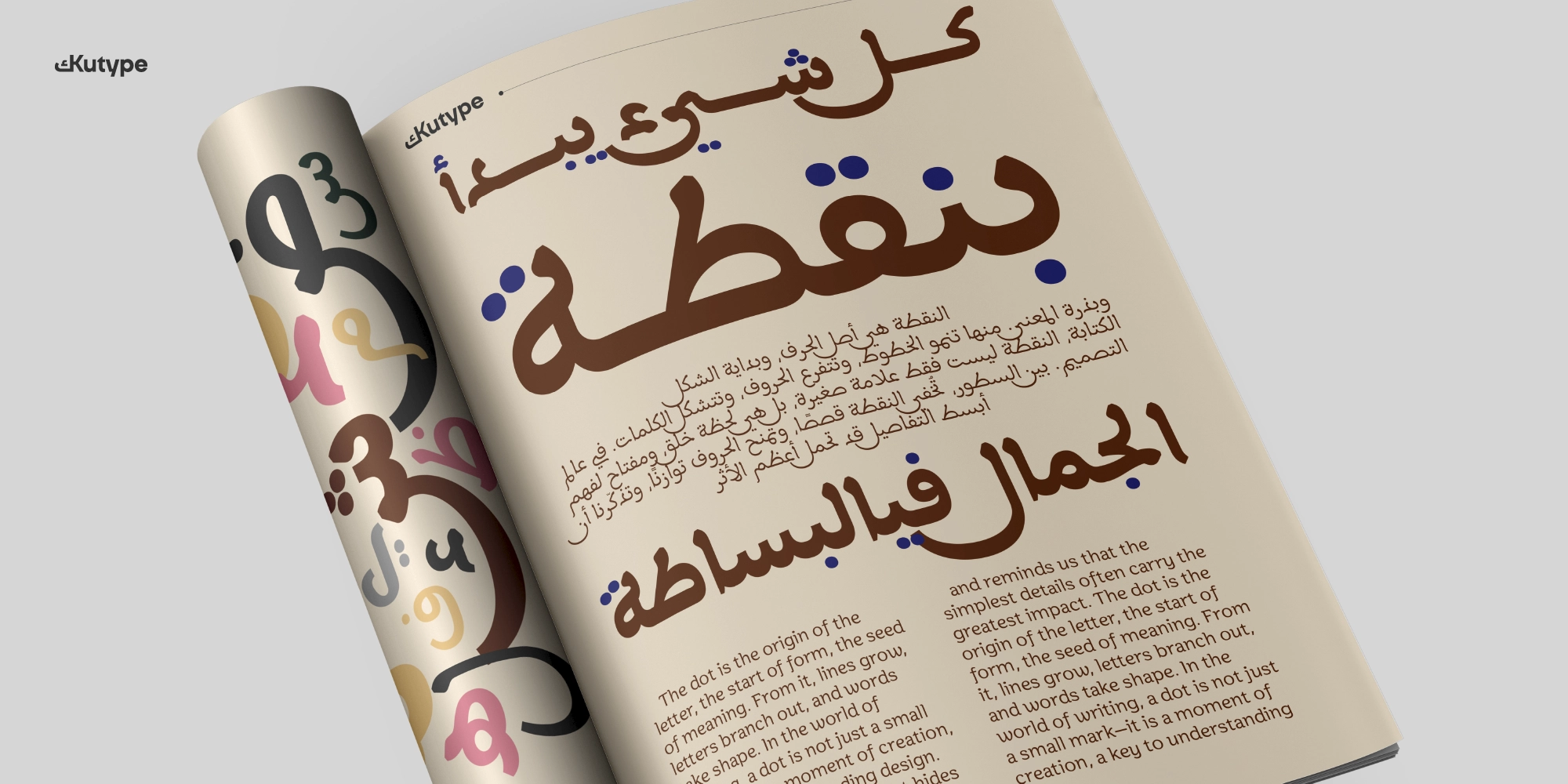
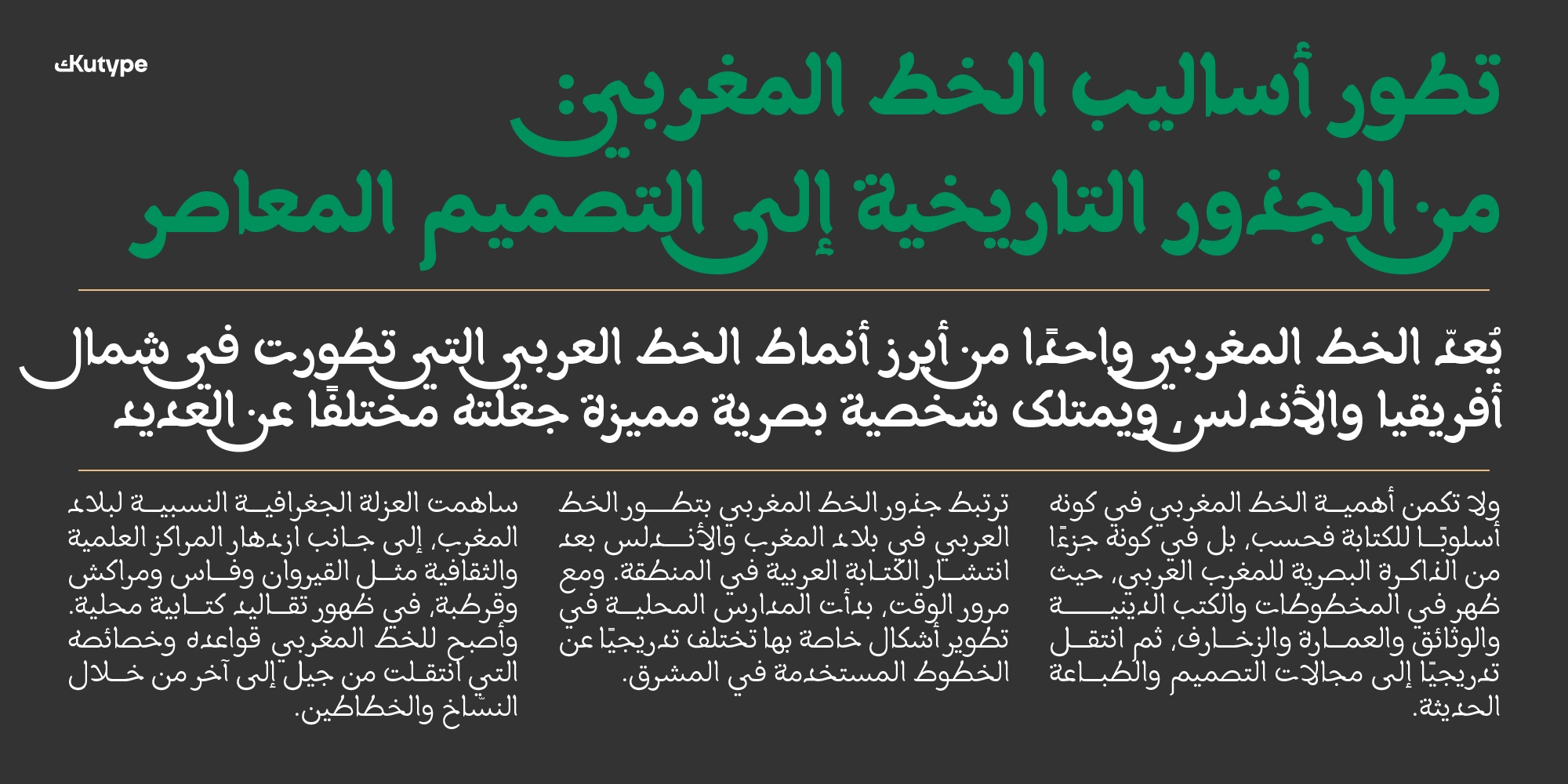
Rather than reproducing a historical calligraphic style literally, Midad Arabic interprets these characteristics through a contemporary typographic perspective. The design seeks to retain the visual personality of Maghribi script while making the forms practical for modern branding, editorial layouts, packaging, cultural communication, and digital applications.
This approach creates a dialogue between past and present. Historic visual language becomes a source of inspiration, while contemporary typography provides a new environment in which that heritage can continue to evolve.
Key Design Characteristics
Midad Arabic belongs to the Maghribi-inspired Arabic category, reinterpreted for contemporary typography. Its design focuses on expressive letterforms, distinctive proportions, organic rhythm, and visual character.
The Arabic letterforms are influenced by several recognizable qualities of Maghribi writing traditions:
- Maghribi-Inspired Forms, expressive shapes influenced by the visual character of western Arabic calligraphy
- Rounded Letter Structures, soft curves and organic forms that create a distinctive rhythm
- Expressive Proportions, characteristic proportions that give the Arabic alphabet a recognizable personality
- Calligraphic Rhythm, variations in form and movement that preserve the feeling of handwritten expression
- Contemporary Construction, historical inspiration refined into a practical modern typeface
Together, these qualities give Midad Arabic a character that feels authentic, expressive, and contemporary, making it suitable for both cultural storytelling and modern visual identities.
Script Coverage
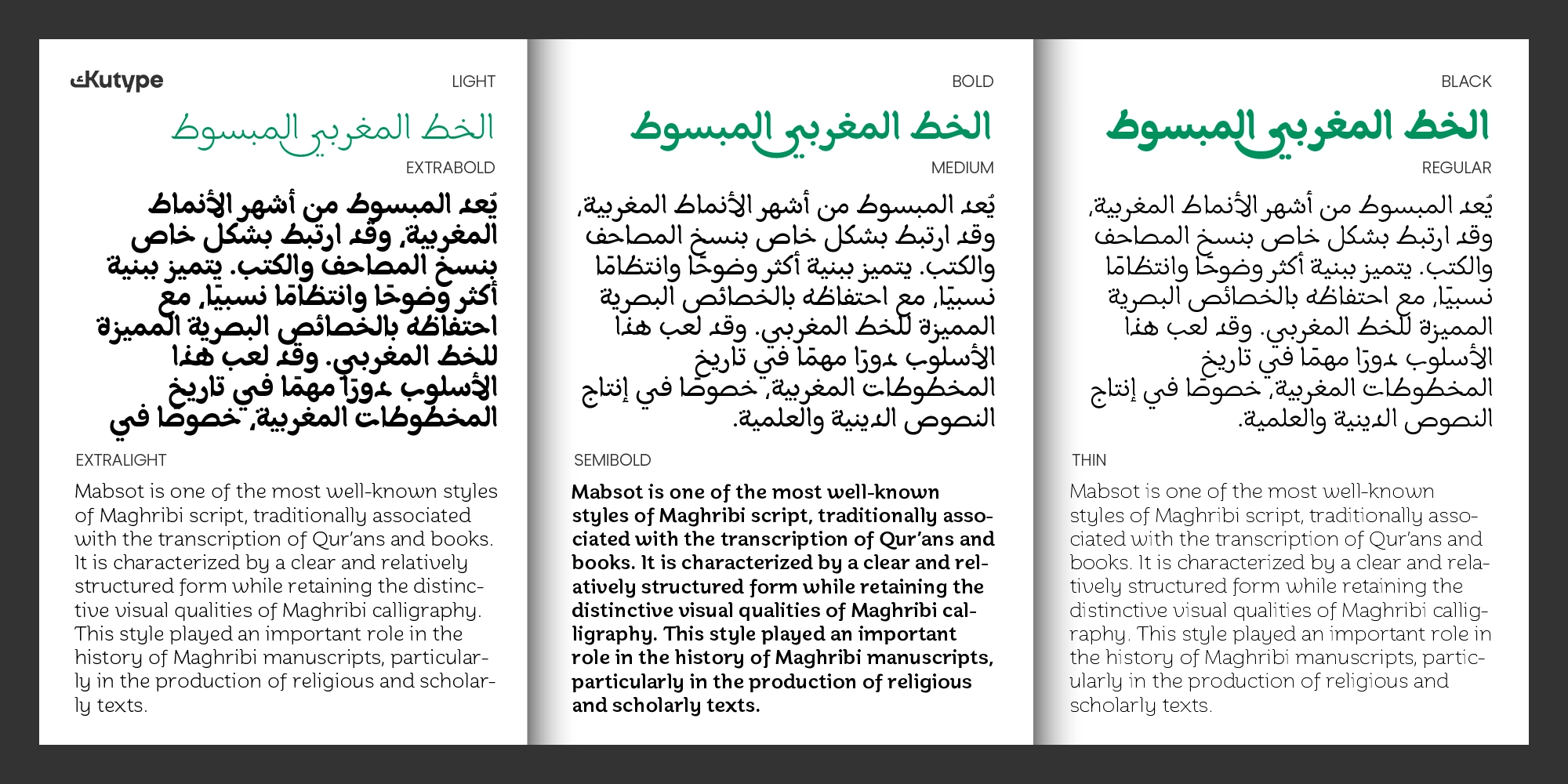
Midad Arabic is developed as part of an Arabic and Latin typeface system, allowing both scripts to work together within multilingual design environments.
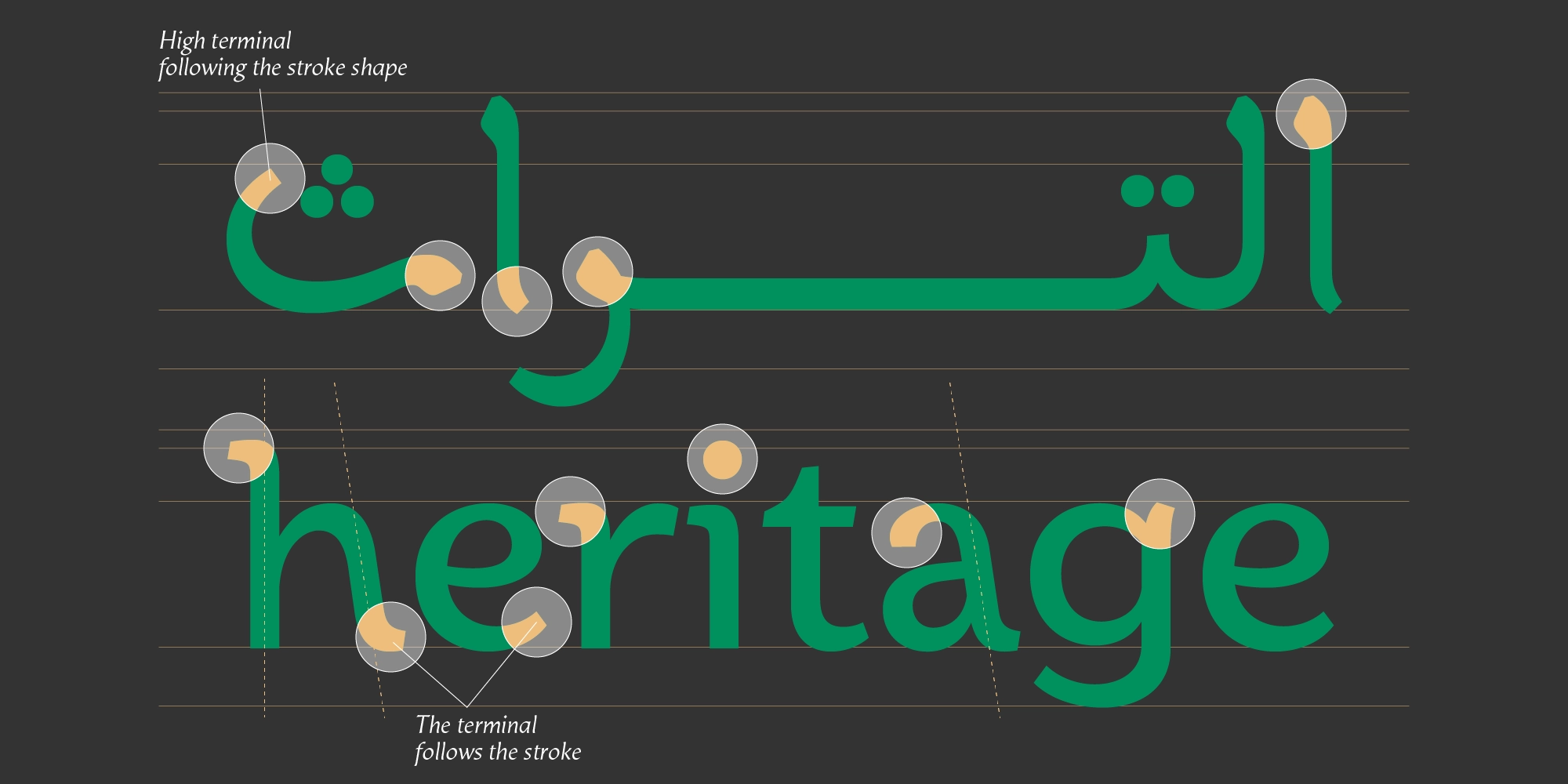
The Arabic script takes inspiration from Maghribi writing traditions, while the Latin companion is carefully constructed to complement the overall proportions, rhythm, and personality of the Arabic forms.
This makes Midad particularly useful for projects that need to move naturally between Arabic and Latin, including bilingual identities, cultural institutions, editorial publications, packaging, websites, and international branding.
The relationship between the two scripts is designed not as a literal duplication of forms, but as a shared visual language.
Weight Range & Styles
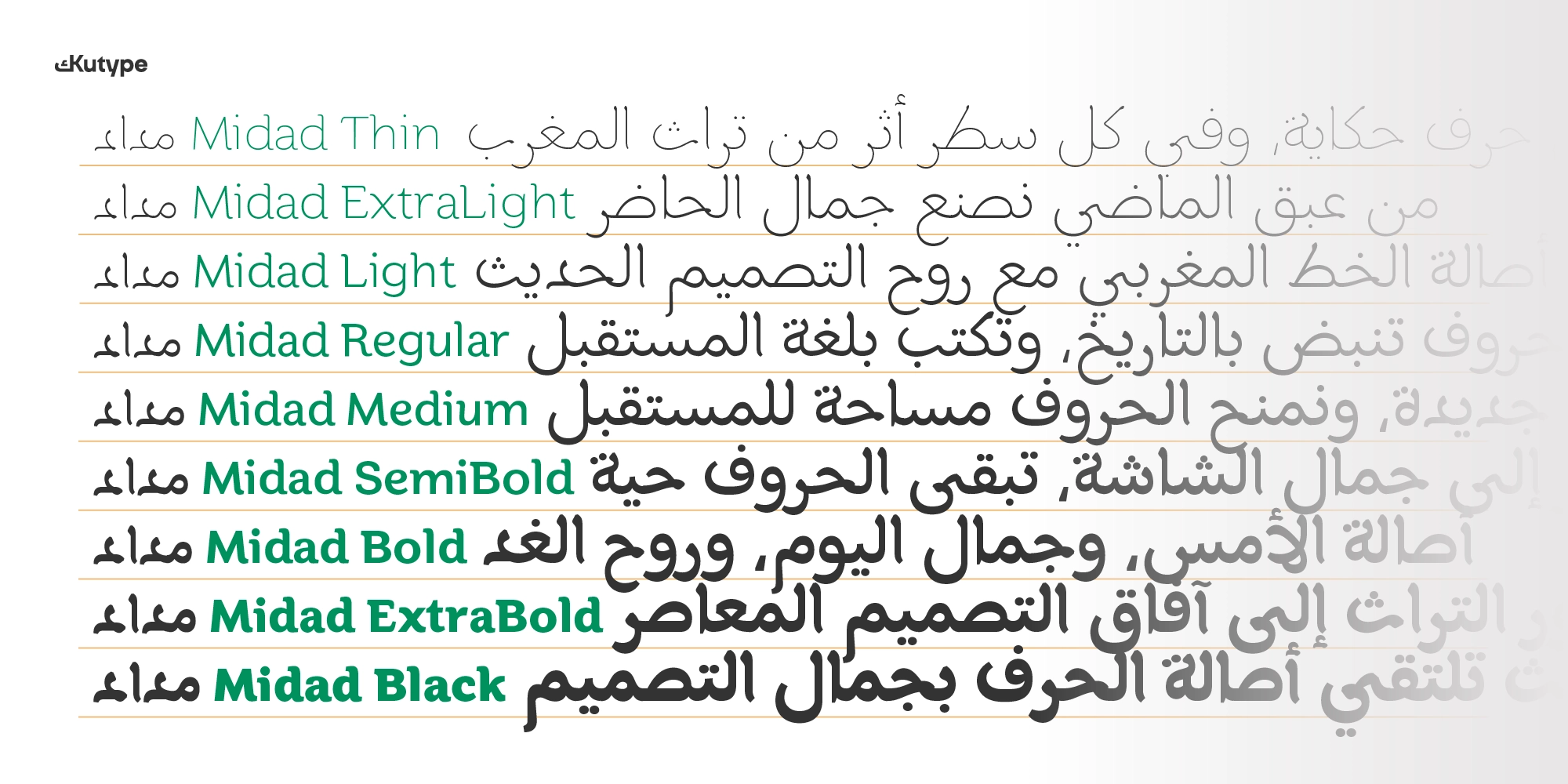
Midad Arabic is designed to provide flexibility across different levels of typographic hierarchy, from refined text applications to expressive display typography.
Its weight system allows designers to establish contrast between headings, subheadings, body text, captions, and supporting information while maintaining the distinctive personality of the typeface.
The range of weights: Thin to Black can be used to create different visual moods, from subtle and elegant compositions to stronger editorial statements.
This flexibility makes Midad Arabic suitable for both quiet cultural narratives and bold contemporary identities.
Midad Arabic's Style Character
Midad Arabic is built around the visual qualities that make Maghribi-inspired lettering distinctive.
Its character can be understood through three central ideas:
- Heritage
- The design draws inspiration from a historical Arabic writing tradition with a rich cultural legacy.
- Expression
- Rounded forms, distinctive proportions, and flowing structures give the letters a strong visual personality.
- Contemporary Interpretation
- Traditional references are transformed into a modern typeface suitable for present-day design applications.
This balance allows Midad Arabic to feel connected to history without becoming visually limited to the past.
Features at a Glance
Midad Arabic is designed for contemporary multilingual design while maintaining a strong connection to Maghribi visual heritage.
- Maghribi-Inspired Arabic, contemporary interpretation of Maghribi calligraphic characteristics
- Arabic & Latin System, designed to support multilingual visual identities
- Heritage-Driven Character, brings cultural depth and historical references into modern typography
- Expressive Letterforms, distinctive shapes create a memorable typographic voice
- Balanced Cross-Script Design, Arabic and Latin work together as a cohesive system
- Editorial Versatility, suitable for headlines, titles, publications, and cultural storytelling
- Branding Ready, suitable for identities that seek a distinctive connection to heritage
- Digital Applications, adaptable to websites, interfaces, and contemporary communication
Every element is considered to maintain a consistent relationship between letterform, rhythm, proportion, and visual identity.
Ideal Use Cases
Midad Arabic is designed for projects that want to combine cultural character with contemporary design.
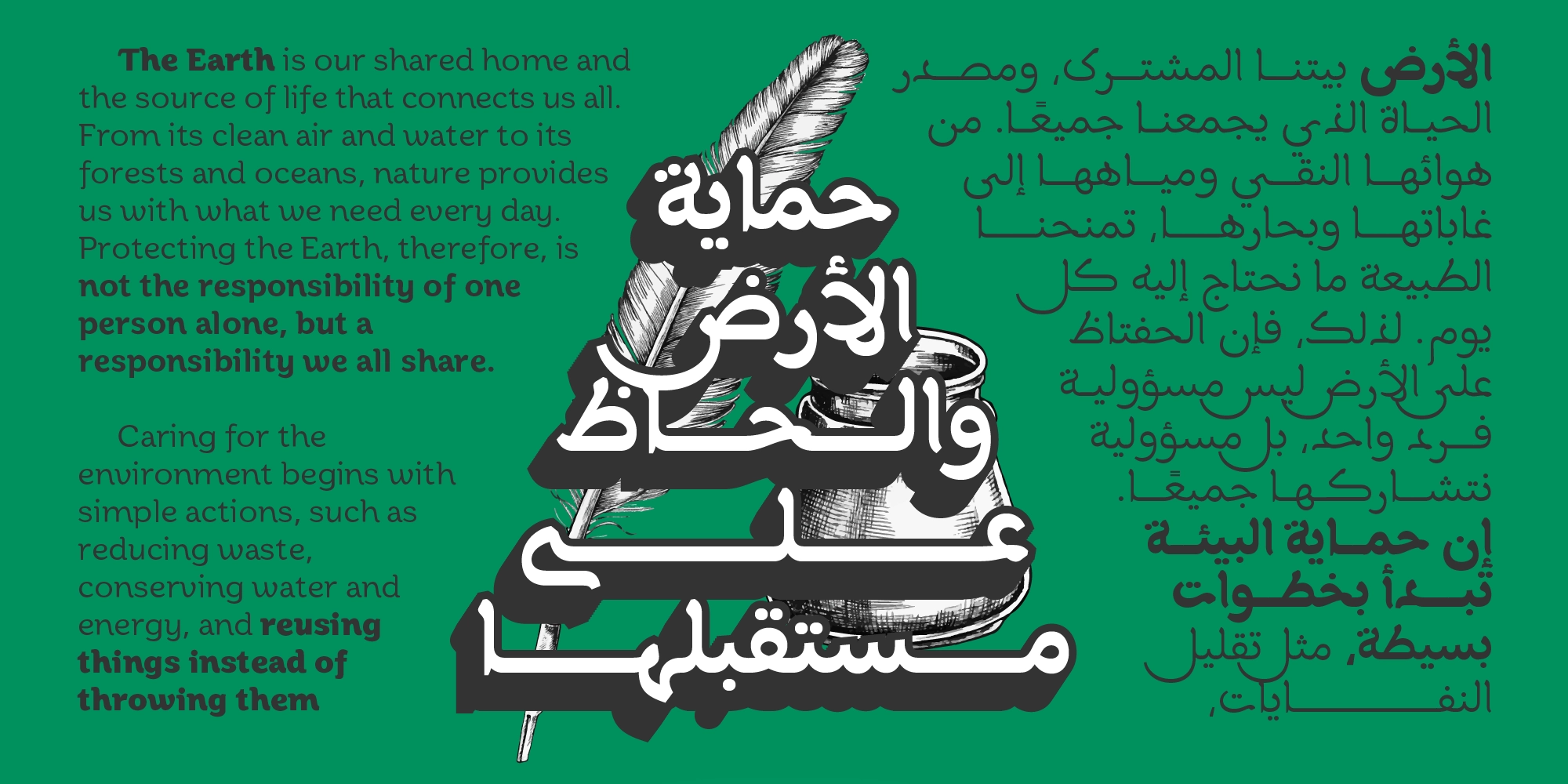
- Cultural Branding & Identity, ideal for museums, cultural organizations, heritage projects, and brands inspired by regional history.
- Editorial & Publishing, suitable for books, magazines, articles, and publications exploring culture, history, art, and literature.
- Display & Headlines, its distinctive Arabic forms create strong visual impact in large-scale typography.
- Packaging Design, suitable for products that want to communicate authenticity, craftsmanship, and cultural character.
- Hospitality & Tourism, works well for hotels, restaurants, travel brands, and destinations with connections to Maghribi or North African culture.
- Bilingual Branding, useful for identities requiring a harmonious relationship between Arabic and Latin scripts.
- Posters & Cultural Campaigns, expressive forms make the typeface effective for exhibitions, festivals, cultural events, and promotional materials.
- Digital & Web Design, suitable for websites and digital platforms where cultural identity needs to coexist with contemporary usability.
Midad Arabic is particularly effective when typography needs to communicate more than information. It can become part of the story, atmosphere, and cultural identity of a design.
From Heritage to Modernity
The strength of Midad Arabic lies in the space between preservation and reinterpretation.
Maghribi calligraphy carries centuries of history through manuscripts, religious texts, scholarly writing, and artistic expression. Its forms reflect the regions, communities, and traditions in which they developed.
Midad Arabic does not attempt to freeze that history in time. Instead, it looks at the visual language of Maghribi script as a source for contemporary design.
The result is a typeface that allows designers to bring historical references into modern contexts. A traditional influence can appear in a contemporary identity. A historical rhythm can become part of a digital interface. A distinctive Arabic letterform can become a modern brand signature.
In this sense, Midad represents a continuous relationship between origin, history, and identity.
Conclusion
Midad Arabic brings the visual spirit of Maghribi script into a contemporary Arabic and Latin typeface system. Inspired by the expressive forms, rounded structures, and distinctive rhythm of Maghribi writing traditions, it transforms historical references into a flexible tool for modern design.
Rather than simply reproducing the past, Midad Arabic explores how heritage can evolve through typography. Its Arabic and Latin scripts create a cohesive multilingual system, while its distinctive character gives cultural and contemporary projects a memorable visual voice.
For designers looking to connect heritage, culture, and modern expression, Midad Arabic offers a typographic language rooted in history while looking toward the future.